A Woman’s Sabbath Salvation on the Sabbath, Luke 13.10-17
Author: Bobby Valentine | Filed under: Jesus, Jewish Backgrounds, Luke, Sabbath, Salvation, Septuagint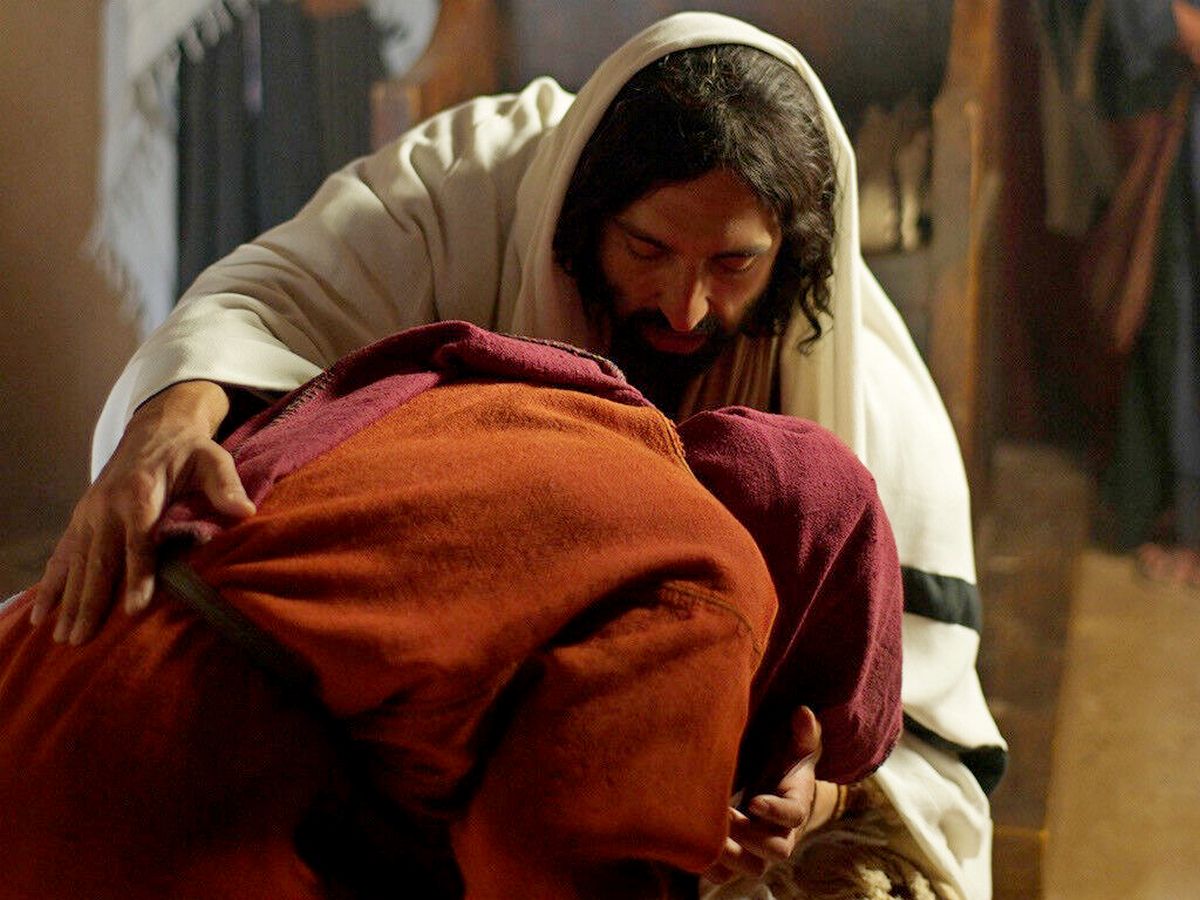
“Now he [Jesus] was teaching in one of the synagogues on the sabbath. And just then there appeared a woman with a spirit that had crippled her for eighteen years. She was bent over and was quite unable to stand up straight. When Jesus saw her, he called her over and said, ‘Woman, you are set free from your ailment.” When he laid his hands on her, immediately she stood up straight and began praising God.
But the leader of the synagogue, indignant because Jesus had cured on the Sabbath, kept saying to the crowd, “There are six days on which work ought to be done; come on those days and be cured and not on the Sabbath day.” But the Lord answered him and said, “You hypocrites! Does not each of you on the Sabbath untie his ox or his donkey from the manger and lead it to water? And ought not this woman, a daughter of Abraham whom Satan bound for eighteen long years, be set free from this bondage on the Sabbath day?” When he said this, all his opponents were put to shame, and the entire crowd was rejoicing at all the wonderful things being done by him.” (Luke 13.10-17, NRSV).
Luke’s Gospel is so Jewish that modern biblical scholars tend to believe that Luke was himself Jewish (not a Gentile as so often claimed in the past). Salvation is typically understood in terms of the Sabbath (Year of Jubilee which is itself part of the Sabbath). The story we encounter in Luke 13 is a window on Jesus of Nazareth and of how Luke tells the story of the Jewish Messiah. Luke paints in very Jewish hues. Let me share just a few of examples of just how deeply Luke’s story is enmeshed with the soil of the Hebrew Bible especially its translation the Septuagint (LXX).
This week I have been wrestling with Luke 13.10-17 the “loosening” or setting free of the woman that stoops. Let me share just a few connections with the Hebrew Bible/LXX …
1) Luke begins the story by explicitly situating Rabbi Jesus as gathered with the saints in the synagogue on the sabbath. Sabbath is mentioned five times within this story. Jewish readers already have quite a bit of information about sabbath in their mind and Luke taps into that.
2) The story illustrates Luke’s willingness to use women to set the agenda for the Good News going all the way back to Mary’s Song in 1.46-55. In this story, the bent woman is exalted and the exalted religious leader is brought low. This daughter of Abraham (the promises made to ancestors mentioned by Mary, 1.55) is liberated/loosed/set free.
3) In the case of the woman with the hemorrhage in 8.43ff she was seeking Jesus. In this case the woman is passive, is not seeking healing, and is set free on the Sabbath day.
4) Luke does not say “Jesus” called the exalted religious leader a hypocrite. Luke says “the LORD” did. This is the voice of the narrator identifying a character in the story as more than those present recognized.
5) Luke is consciously connecting this with the purpose of the Sabbath and the year of Jubilee is plain. This woman is “crippled” in v. 11 but Jesus says she has been set free from “bondage” (i.e. slavery) in v.16. The Sabbath celebrates the setting free the Children of Abraham (she is a “daughter of Abraham”) in Deuteronomy 5.12-15. Jesus as “Lord” has enacted the “Sabbath” for this woman.
6) Note the extending of the hand/arm language. “Woman, you are set free …” (Jesus uses a passive) … When he laid his hands on her …” (v.13). Deuteronomy 5.15 reads “remember you were bond slaves in the land of Egypt, and the LORD your God delivered you with a mighty HAND and OUTSTRETCHED ARM …(LXX)” Jesus touching this woman is not simply an act of compassion (though it is that)! The “Lord” has delivered her on the Sabbath!
7) The exalted religious leader is humiliated by Jesus because he does not know his Bible. Jesus appeals directly to the Sabbath itself where compassion is extended to all of God’s creation including animals. It is NOT a violation of the Sabbath to care for, feed, and love your animals on the Sabbath. The Rabbis call it Tza’ar Ba’alei Chayim. Animals have the same basic rights as humans in the Torah but people often still think of them as “lesser.” But the religious leader believes that it is perfectly legal to “loose” or “set free” an ox (same word that is used in v. 16 in reference to the woman) ON THE SABBATH but this daughter/child of Abraham cannot have the same grace as the animal. Thus “the LORD” calls him a HYPOCRITE! There is no better day for a daughter of Abraham to be set free from bondage than the day that celebrates setting the slaves free!
How often do we observe the the letter of the law but have no clue what it actually means? When actual meaning shows up we react like the religious leader did to “the Lord.”
8) There are many more connections but the final one I will draw out is from Luke’s summary of the story in v.17. Luke’s vocabulary is drenched in the LXX! He writes the “crowd was celebrating at all the marvelous things/great and awesome things that he was doing.”
Luke uses the word endoxois here. This is normally an adjective but is used only here in the whole NT as a noun. This word in the LXX describes GOD’S mighty deeds of salvation and liberation that are remembered on the Sabbath. For example in Deuteronomy 10.21 we read, and note the connection to “praise” as the woman did in v.13, “HE [God] is your praise; he is your God, who has done for you these MARVELOUS THINGS that your eyes witnessed.” Or in Exodus 34.10 when God renews the covenant with Israel after the adultery with the bell hop on the honeymoon by Israel, “I [God] now make a covenant. In front of all your people, I will perform MARVELS/WONDERS/GREAT DEEDS, such as have never been performed in all the earth or in any nation …”
The Exodus text is significant too because it promises God’s “marvels” as a prelude to REST (ahhhhhh a Sabbath theme!) . Luke tells us the “Lord” gave “rest” to a “daughter of Abraham” by setting her “loose” or “free” on the Sabbath day.
Jesus did not just live the Sabbath he WAS the Sabbath freeing the children of Abraham from slavery. Those tasked with teaching doctrine or truth to God’s People failed and were “brought low,” as Mary promised, because they did not understand the very Bible they claimed to have mastered.
There is a LOT going on in this story of liberation in Luke 13. Jesus, like God in the Hebrew Bible, saw the misery of captives (like Exodus 1 and 2) and he acted without her consent to do what God will do … Act in Mercy. The Sabbath Day is the celebration of Mercy on all God has made … animals and even daughters of Abraham!
Be Blessed
See Also
Luke, ‘the Women,’ & New Creation
Aroma of Incense: Shadow of the Temple in Luke’s Jewish Story of Jesus and the Way
Leave a Reply