THE NOBODIES: Kingdom 101, Ethics from the Location of the “Least of the Nobodies”
Author: Bobby Valentine | Filed under: Contemporary Ethics, Discipleship, Exodus, Kingdom, Mission, Politics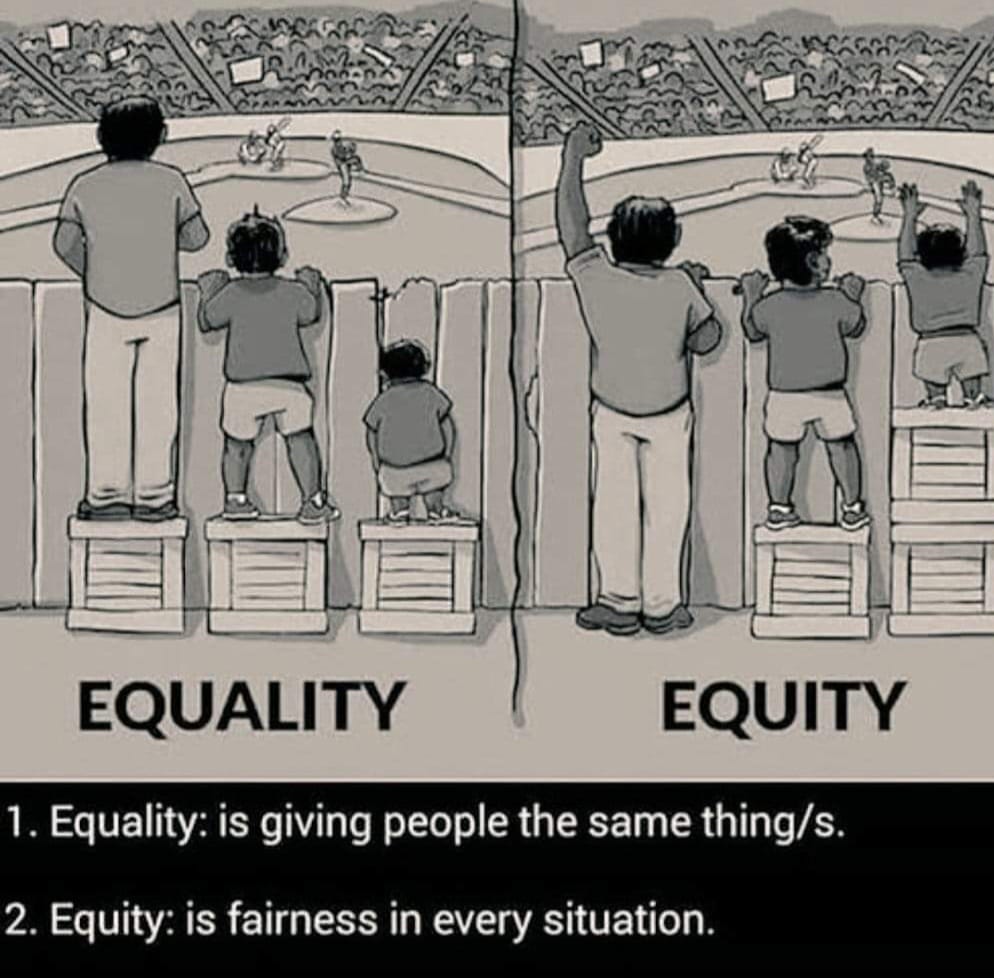
I confess that one of the hardest aspects of Kingdom living is living out of an identity of being an alien, outsider, impoverished, the disinherited. I posted a meme of three people looking over a fence to illustrate the difference between so called “equality” and justice/equity/grace. For some it was self-evident. For a number it was quite controversial. “Who determines what is fair?” “The meme justifies stealing because they didn’t pay to see the game.” Numerous similar comments.
But the “critics” do not “identify” with the little person standing on top of two crates (two crates were needed). Why is this case?
In the Kingdom economy justice/righteousness/equity begins with grace to the alien/outside/poor/disinherited. The God of Israel chooses the poor. In the words of David Lipscomb, “the poor as a class constitute the elect!” But rare is the person who believes this.
Theologically, God identifies with the disinherited. King Jesus also identifies with the least of these (Matthew 25). But Scripture goes beyond telling us that GOD identifies with the disinherited. Scripture tells God’s People that THEY are to have this identity. The Sabbath command is rooted in Yahweh’s saving act for the disinherited and then in the command to “remember that you were a slave in Egypt” (Deuteronomy 5.12-15). In fact never forget that you were a slave. Being the “disinherited” is the “identity” of God’s graced people.
Moses puts it like this in the “Book of the Covenant” (Exodus 20:22-23:19).
“And a stranger/alien you must not wrong or oppress
for strangers/aliens you were in the land of Egypt.
Any widow or orphan you must not abuse.
If you abuse, yes abuse, them
I will listen, yes listen, to their cry …” (22.21-23, my translation)
What will Yahweh do when he listens to the cry (that expression echoes the Israelites own cry under oppression at the hands of Pharaoh in Exodus 1-2). One of the most terrifying verses in the entire Bible follows:
“I will listen, yes listen, to their cry.
My wrath will be kindled
and I will kill you with the sword” (22.23b-24).
God identified with the abused. God will do to the abuser what God did to Pharaoh. If a redeemed slave DARES to embrace the life from which they were redeemed, it is Yahweh they will contend with. Israel dare not become anything other than one who identifies with the least of these. Moses makes it explicit.
“A stranger/alien you MUST not oppress,
You yourselves KNOW THE HEART OF THE STRANGER/ALIEN,
for strangers/aliens you were in Egypt.” (Exodus 23.9)
God’s People do not identify with the people in the stands in the meme. God’s People do not identify with the person viewing the three people from behind. God’s People do not identify with the tall person who stands on his/her “own two feet” and sees just fine. Rather God’s People identify with the little person who was excluded, needed not one but two crates merely to see. God’s People identify with as the rescued, graced, aliens of Yahweh. When we identify with that “little person,” the excluded one, then the meme becomes crystal clear.
The People of God by definition “know the heart of the alien for/because you were aliens in Egypt.” This identify is found throughout the biblical narrative from the Exodus to Revelation. The Heroes of Israel are heroes of faith because they remain faithful while being aliens and migrants (Hebrews 11). Peter calls God’s people “exiles” and “strangers/aliens.” (1 Peter 1) James identifies us as exiles (James 1). The Book of Revelation identifies God’s People as the very definition of outsider.
The Son of Man, the living embodiment of God’s People, has no place to call home, is identified with the outsider, was anointed by God specifically to proclaim Jubilee to the very People that the God of Israel calls his own … the Nobodies. The ecclesia of God is nothing less than the liberated Nobodies where Jubilee is the law of grace in the land.
Leave a Reply